
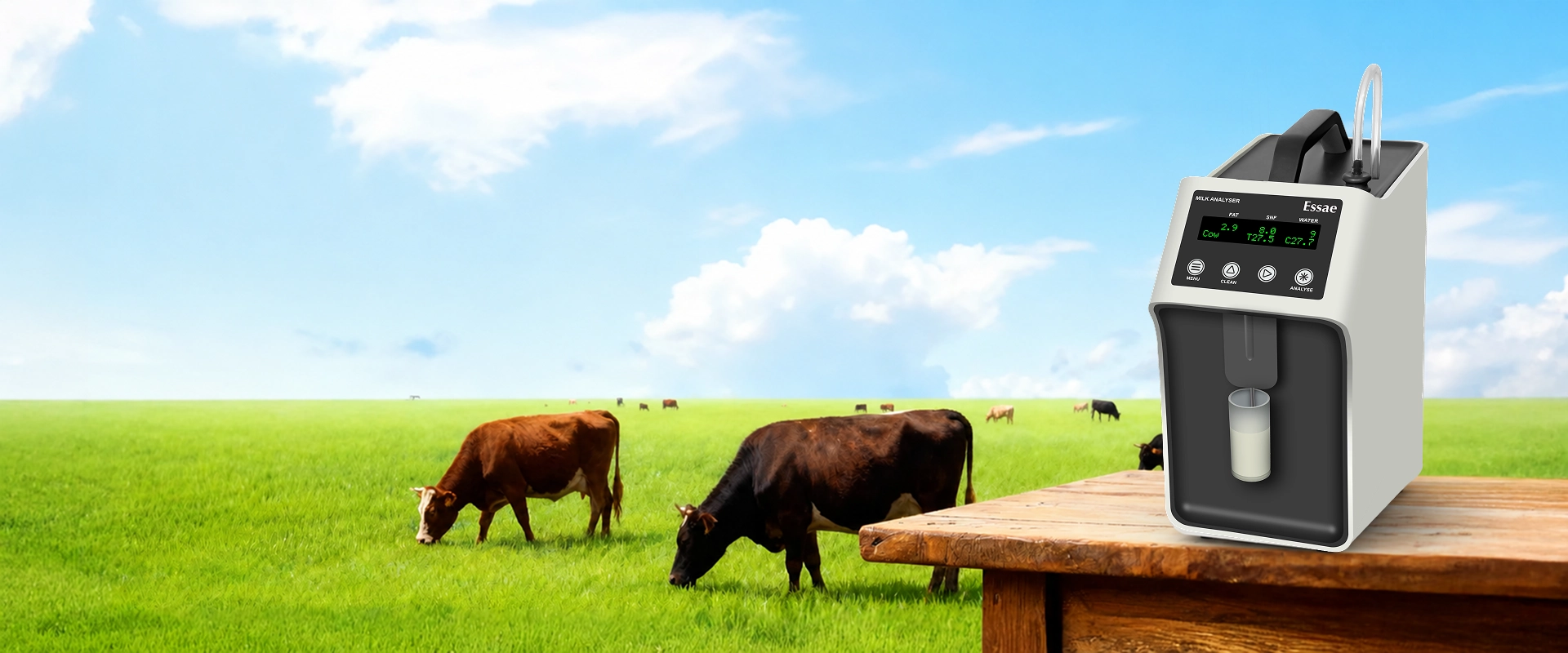
Milk is a highly sensitive liquid, and even small temperature changes can affect its freshness, composition, taste, and stability. In hot climates or during long transport, milk can heat up quickly, which leads to rapid bacterial growth and chemical changes. This is where modern milk testing machines, equipped with advanced hardware components, play an important role in identifying quality issues before the milk reaches processing units.
In this blog, let’s explore how high temperatures impact milk quality and how hardware-driven testing machines help dairies maintain accurate readings, fair payments, and safe milk handling.
How high temperatures affect milk quality
1. Rapid rise in bacterial load
Warm temperatures create an ideal environment for bacteria. At 30-40°C, microbial activity increases sharply.
As bacteria multiply, milk develops:
- Sour smell
- Thick or curdled texture
- High acidity
- Short shelf life
Once the bacterial load crosses safe limits, milk becomes unsuitable for processing.
2. Changes in Fat, SNF, and density
Heat causes natural components of milk to break down.
- Fat globules rise and separate
- Protein bonds weaken
- Lactose converts to lactic acid
- Density drops due to structural changes
These changes lead to lower fat and SNF readings, even when the milk originally had good composition.
3. Breakdown of proteins and minerals
Temperatures above 35°C cause proteins to denature. This results in:
- Bitter or burnt taste
- Water consistency
- Lower heat stability
This is a major challenge for processing products like cheese, paneer, and curd.
4. Increased acidity
Bacteria convert lactose into lactic acid faster at high temperatures. This raises acidity levels, which leads to:
- Quick curdling
- Poor pasteurization results
- Product rejection at processing units
Accurate acidity testing becomes crucial in such conditions.
Why milk testing machines are important
Modern milk testing machines use a combination of electronics, sensors, optical modules, heating units, cooling systems, mixing motors, ultrasonic readers, and calibration circuits to provide reliable quality readings even when milk has been exposed to heat.
How milk testing machines help detect heat-affected milk
1. Stable fat and SNF readings using advanced sensors
Milk analysers today use:
- Ultrasonic sensors
- Infrared (IR) modules
- Optical photodiodes
These components measure fat, SNF, protein, lactose, and density with high stability. Even if milk temperature has fluctuated, the machine’s internal compensation circuit delivers accurate values.
This helps avoid wrong payouts and rejects caused by heat exposure during transport.
2. Temperature compensation through internal heating systems
Many milk analysers come with built-in:
- PTC heaters
- Thermistors
- Automatic temperature correction circuits
These components bring the milk sample to the machine’s ideal operating temperature before testing begins. This prevents skewed readings that happen when milk is too hot or too cold.
3. Internal mixing motors maintain uniform samples
Heat often separates fat and solids. Modern machines use high-speed mixing motors to homogenize the sample before reading it. This gives:
- Better accuracy
- Stable repeat tests
- Reduced variation due to uneven fat distribution
This is especially important when milk has been sitting in warm cans for long hours.
4. PCB stability for consistent performance
High temperatures affect not only milk, but also the electronics inside testing machines.
Premium analysers use:
- Heat-resistant PCBs
- Shielded circuits
- High-quality capacitors
- Thermal insulation around sensors
This avoids drifting values, noisy signals, and component failure during hot seasons.
5. Detection of spoiled or adulterated milk
When milk gets too warm, spoilage happens quickly. Using hardware-supported algorithms and sensors, machines can detect.
- High acidity
- Added water
- Density drop
- Abnormal SNF values
- High freezing point
- Low conductivity
These indications signal that the milk has deteriorated during transport or storage.
6. Fast test cycles during peak heat
During the summer, milk needs quick testing to prevent mixing spoiled samples with fresh ones. Analysers use fast-response hardware such as:
- Low-noise amplifiers
- High-speed ADC converters
- Rapid-cycle ultrasonic modules
This produces test results in seconds, helping operators handle large sample volumes efficiently.
7. Protection from voltage fluctuations in rural areas
High temperatures often come with voltage drops and power instability. Reliable machines include:
- SMPS power units
- Surge protection circuits
- Voltage stabilizing ICsVoltage stabilizing ICs
These features keep the machine working smoothly even in challenging field conditions.
Practical tips for handling milk in hot conditions
Even with advanced machines, proper handling practices make a big difference:
- Collect milk early morning or late evening
- Keep storage cans covered and shaded
- Prefer stainless steel cans over plastic
- Reduce the distance between the farm and chilling centre
- Use insulated transport where possible
- Keep collection centres well-ventilated
These steps reduce temperature rise and slow down bacterial activity.
Why hardware-backed milk testing matters today
As dairy operations grow, quick and accurate testing becomes essential. The use of advanced hardware in milk analysers brings several benefits:
- Reliable readings during extreme temperatures
- Fair farmer payments
- Reduced milk rejection
- Protected dairy product quality
- Faster processing at collection centres
- Lower losses due to spoilage
Testing machines bridge the gap between field conditions and processing demands.
Conclusion
High temperatures can damage milk quality faster than most people expect. From bacterial growth to changes in fat, SNF, and acidity, every parameter gets affected when milk is exposed to heat.
But with today’s advanced milk testing machines, powered by sensors, heating units, optical modules, stable PCBs, and smart compensation systems, dairies can monitor milk quantity quickly and accurately.
These machines help detect heat-affected milk early, support fair procurement, reduce wastage, and protect the overall value chain. In a warm climate, this combination of good milk handling and strong hardware is one of the most reliable ways to maintain consistent quality.


