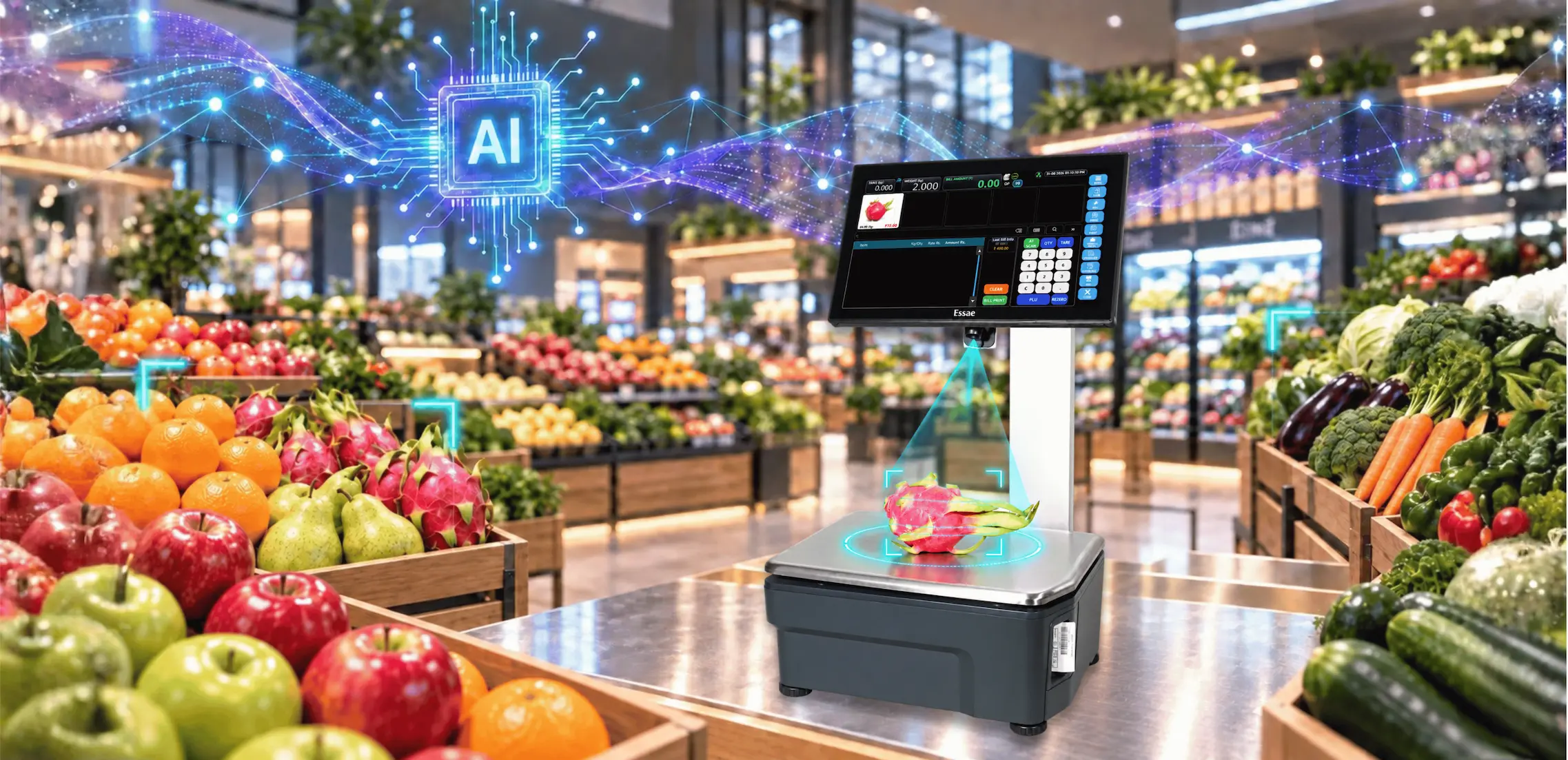
Every business wants work to move faster. Whether it is a supermarket billing counter, a food processing unit, a dairy collection center, a warehouse, or a manufacturing plant, delays often start with small manual tasks. Employees spend time weighing products, entering data, checking records, printing labels, and updating systems. While these tasks may seem simple, they can slow down operations when repeated hundreds or thousands of times each day.
This is where AI-powered weighing scales are changing the way businesses work. Modern weighing solutions do much more than measure weight. They help businesses capture data instantly, reduce manual work, speed up transactions, and connect important processes across departments. The result is a faster workflow, better accuracy, and more time to focus on business growth.
The Shift from Traditional Weighing to Smart Automation
For many years, weighing equipment was used only to display weight. Employees had to record values manually and transfer information into billing or inventory systems. Today, businesses need much more than weight measurement. They need systems that can collect, process, and share information instantly.
AI-powered weighing scales bring intelligence into everyday operations. They can identify products, generate labels, communicate with software systems, and support automated decision-making. Instead of treating weighing as a separate activity, businesses can make it part of a connected workflow. This helps reduce delays and removes many repetitive tasks from daily operations.
Faster Product Identification and Processing
One of the biggest challenges in retail and production environments is product identification. Employees often spend time selecting products manually or entering information into the system. This can slow down customer service and create opportunities for mistakes.
AI-enabled weighing scales can recognize products faster through stored databases, barcode systems, and intelligent product matching features. Once a product is identified, the system can automatically calculate weight, pricing, and other required information.
This shortens transaction time and helps businesses process more orders without increasing workload.
Smarter Retail Billing and Checkout Operations
In supermarkets, grocery stores, bakeries, and food outlets, checkout speed directly affects customer satisfaction. Long queues often result from manual weighing, manual pricing, and repeated data entry.
Smart weighing scales connected with POS systems help automate these activities. Product weight, price, barcode information, and billing details move directly into the billing system without extra effort. Employees spend less time entering information, and customers complete purchases faster.
When hundreds of transactions happen daily, even a few seconds saved on each transaction can create a major improvement in overall efficiency.
Better Inventory Accuracy with Real-Time Data
Inventory errors create problems across the entire business. When stock information is incorrect, companies may face shortages, overstocking, delayed deliveries, or unnecessary purchases.
AI-based weighing solutions help businesses maintain accurate inventory records by capturing weight data automatically and updating connected systems in real time. As products move through receiving, storage, production, or dispatch stages, information is recorded immediately.
Managers gain better visibility into stock levels and can make decisions based on actual data instead of estimates. This improves planning and reduces costly inventory mistakes.
Supporting Food Processing and Manufacturing Workflows
In food processing and manufacturing environments, accurate measurement plays an important role in production quality. Manual weighing can slow production lines and increase the risk of inconsistencies.
Smart weighing systems help automate ingredient measurement, batch control, packaging verification, and quality checks. Data is captured automatically and stored for future reference.
Production teams can track operations more effectively while maintaining consistency across different batches. This not only saves time but also helps maintain product quality standards.
Simplifying Dairy Collection and Quality Monitoring
Dairy operations depend heavily on speed and accuracy. Milk collection centers handle large volumes every day, and manual record keeping can create delays and errors.
When smart weighing systems work alongside milk analyzers and data management tools, collection processes become much faster. Weight, quality parameters, supplier details, and transaction records can be captured automatically.
This reduces paperwork and allows dairy operators to process larger volumes without increasing administrative effort. The result is smoother operations and better record management.
Reducing Human Errors Across Operations
Human errors often happen during repetitive tasks. A misplaced decimal, incorrect weight entry, wrong label, or missed inventory update can create problems throughout the business. AI-powered weighing systems reduce dependence on manual data entry.
Information is collected directly from the source and transferred automatically to connected systems. This lowers the chance of mistakes and improves confidence in operational data. When employees spend less time correcting errors, they can focus on more productive work.
Improving Traceability and Compliance
Many industries need detailed records for quality control, audits, and regulatory requirements. Finding information from paper records can be difficult and time-consuming. Smart weighing solutions create digital records automatically during each transaction.
Businesses can track product movement, weight details, production information, and transaction history whenever needed. This makes reporting easier and supports compliance requirements without creating additional administrative work.
Helping Businesses Scale Without Increasing Complexity
As businesses grow, manual processes become harder to manage. What works for a small operation may not support larger transaction volumes. AI-powered weighing systems help businesses handle increasing workloads without adding unnecessary complexity.
The same intelligent systems can support multiple locations, larger inventories, higher production volumes, and growing customer demand. This creates a strong operational foundation for future expansion.
Conclusion
Workflow automation is no longer limited to large corporations. Businesses of every size are looking for practical ways to save time, reduce manual effort, and improve daily operations.
AI-powered weighing scales help achieve these goals by turning ordinary weighing activities into intelligent business processes. From retail billing and inventory management to manufacturing, food processing, and dairy operations, smart weighing solutions help work move faster and more accurately.
Looking for faster workflows and better operational accuracy? Explore how Essae’s Teraoka smart weighing solutions can transform your daily business processes.