
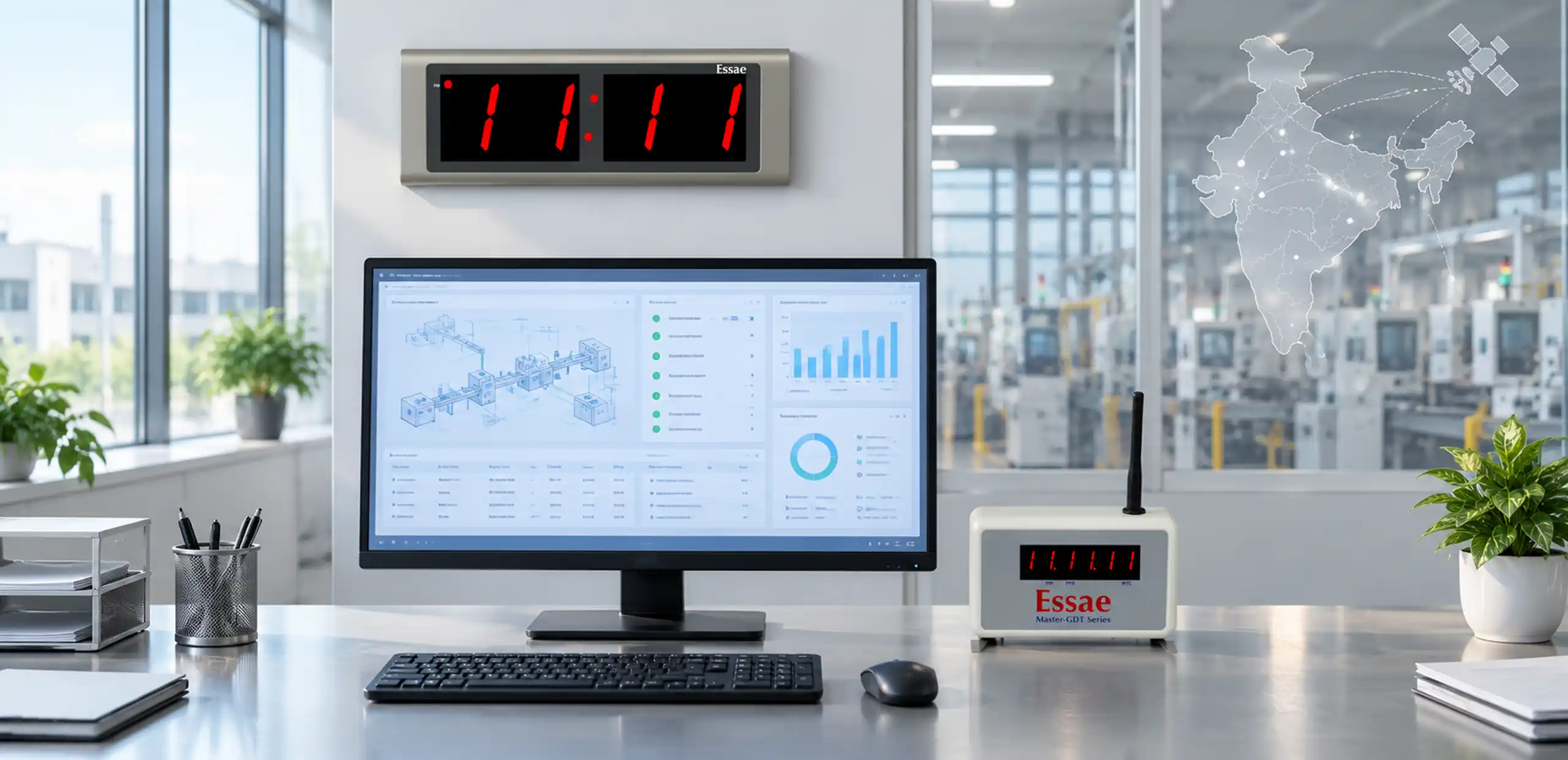
Time is something we all follow, but how accurately do we keep it? A few seconds may not matter when you are checking the time before leaving for work. But for banks, railways, telecom networks, power systems, factories and digital services, even small differences can affect how systems coordinate and record events.
To address this, India has taken another important step towards “One Nation, One Time.” The Government of India notified the Legal Metrology (Indian Standard Time) Rules, 2026 on 27 August 2026. The rules establish Indian Standard Time (IST) as the common time reference for legal, administrative, commercial, and other official purposes across the country.
To address this, India has taken another important step towards “One Nation, One Time.” The Government of India notified the Legal Metrology (Indian Standard Time) Rules, 2026 on 27 August 2026. The rules establish Indian Standard Time (IST) as the common time reference for legal, administrative, commercial, and other official purposes across the country.
So, what exactly do these new rules mean? Why does India need a common time reference when we already follow IST? And how can GPS-synchronised clocks help organisations maintain accurate time within their facilities? Let’s break it down.
What Is “One Nation, One Time”?
In simple terms, One Nation, One Time means having a common and reliable time reference that systems across India can use.
India already follows Indian Standard Time. The bigger challenge is making sure that different clocks, computers, networks, and systems are actually synchronised with that reference.
Think about a large organisation with hundreds of clocks and digital systems. If one clock is a few seconds ahead and another is slightly behind, it may not matter in everyday life. However, when systems need to record transactions, coordinate operations, or create time-stamped records, these differences can become important.
The One Nation, One Time initiative aims to create a more consistent and reliable approach to time dissemination across the country. For organisations, this also highlights the importance of having reliable ways to receive and distribute accurate time across their facilities.
What Are the New IST Rules 2026?
The Legal Metrology (Indian Standard Time) Rules, 2026 establish IST as the common time reference for legal, administrative, commercial and official purposes across India. Notified on 27 August 2026, the rules will come into force 180 days after publication in the Official Gazette, giving organisations time to review their existing timekeeping systems and make necessary changes.
The rules are particularly important because many essential services depend on accurate and consistent timekeeping, including:
- Banking and digital payments – for accurate transaction timestamps and records.
- Telecommunications – for coordinating networks and communication systems.
- Railway operations – for coordinating schedules and operations.
- Power systems – for synchronising different parts of the electricity network.
- Computer networks – for maintaining accurate system logs and event records.
- Government records – for consistent and reliable official timestamps.
As these systems become increasingly connected, having a trusted time reference becomes more important.
Why Does Accurate Time Matter?
For most people, a clock being a few seconds off is barely noticeable. But imagine hundreds of systems communicating with one another.
A digital payment needs a timestamp. A railway network needs coordinated schedules. A telecom network needs accurate timing between systems. Power networks also depend on precise coordination.
When different systems use slightly different time sources, it can become harder to coordinate events and maintain accurate records.
This is why time synchronisation is more than simply making clocks display the same numbers. It is about giving different systems a common reference they can rely on.
The government’s One Nation, One Time initiative brings this requirement into sharper focus, particularly for sectors where accurate timestamps and coordinated operations are important.
How Will India Disseminate Standard Time?
The initiative goes beyond simply putting accurate clocks in public places.
India is developing infrastructure to distribute accurate IST through Indian institutions and Legal Metrology laboratories. The framework also provides for the use of NavIC, India’s satellite navigation system, along with other approved Indian timing sources.
Another important development came in July 2026, when a White Rabbit Technology-based IST Dissemination Demonstration Network was commissioned at the Regional Reference Standard Laboratory in Bengaluru.
The network demonstrated highly accurate and secure time synchronisation for critical sectors such as banking, telecommunications, power, transportation and digital governance.
This shows that accurate time is becoming an important part of India’s wider digital and physical infrastructure.
What Does This Mean for Businesses and Institutions?
For businesses, the change is not simply about replacing an old wall clock with a new one. The bigger requirement is to have reliable and consistent time across the systems and facilities that depend on it.
Organisations can use the 180-day transition period to review how their clocks, digital systems, network equipment, attendance systems and operational processes currently receive and maintain time.
For large facilities such as factories, hospitals, educational campuses, offices, data centres, and public institutions, manually setting multiple clocks can make it difficult to keep every display in sync.
This is where a GPS-synchronised clock system can offer a practical solution.
Essae’s GPS clock solutions use an accurate GPS time reference to synchronise clocks across a facility. Instead of adjusting individual clocks manually, a central time source can help multiple clocks display the same accurate time.
This can be particularly useful for organisations where teams, processes, and operations work across different areas but follow the same schedule.
With India’s move towards a more standardised and reliable time infrastructure, solutions such as these can help organisations strengthen their time synchronisation practices at the facility level.
How Essae GPS Clocks Support Accurate Timekeeping
The move towards One Nation, One Time highlights an important requirement for organisations: having access to a reliable time reference and keeping different clocks aligned with it.
This is where Essae’s GPS-synchronised clock solutions can play a practical role.
The Essae GDT-57 GPS receiver clock receives time information through GPS and uses it to maintain accurate time. It can also transmit the synchronised time through RF, allowing multiple clocks within a facility to follow the same time reference.
Some of its key features include:
- GPS-based time synchronisation for accurate timekeeping.
- RF transmission to distribute synchronised time to other clocks.
- 57 mm LED display for clear visibility.
- Internal accuracy of ±1 second, as specified for the product.
- Up to 300 metres of RF coverage in line-of-sight conditions.
These features make the GDT-57 suitable for environments where multiple teams or departments need to work from the same time reference. The clock is listed for applications across manufacturing, healthcare, education, broadcasting, data centres and public institutions.
For example, in a manufacturing facility, clocks across the production floor, control room, and administration area can receive the same synchronised time instead of being adjusted separately. In a hospital or educational institution, the same approach can help different departments follow common schedules.
While the new IST rules establish the broader national framework for a common time reference, organisations still need practical ways to maintain consistent time within their own facilities. GPS-synchronised clocks can help bridge that gap by bringing accurate timekeeping into everyday operations.
Why Time Synchronisation Matters Inside a Facility
Imagine a manufacturing plant where the production floor, control room, and administrative office all have separate clocks. Even a small difference between them can create confusion when teams are working to fixed schedules.
A synchronised clock system provides a common time reference across these areas. With Essae’s GPS clock solutions, multiple clocks can receive synchronised time rather than relying on manual adjustments.
This can be useful in factories, hospitals, educational institutions, offices, warehouses, laboratories, and other large facilities where accurate time is important for coordinating people, processes, and operations.
The benefit is simple: one reliable time reference, displayed consistently across the facility.
Is One Nation, One Time Only About Clocks?
No. This is perhaps the most important thing to understand. One Nation, One Time is not simply a wall-clock initiative.
It is about creating a trusted and consistent time reference for systems that depend on accurate timestamps and coordination.
A visible digital clock is just one part of the larger picture. Behind it are networks, servers, financial systems, communication infrastructure, transportation systems, and other technologies that need accurate time.
The government’s approach also focuses on reducing dependence on foreign timing sources by developing Indian time dissemination infrastructure and providing approved Indian timing sources such as NavIC.
At the organisational level, the same principle applies. A reliable time source needs to reach the different clocks and systems that people and processes depend on. This is where solutions such as Essae’s GPS-synchronised clocks can support consistent timekeeping across a facility.
What Should Organisations Do Now?
The new rules come with a 180-day window before they take effect. Organisations can use this time to review how their systems currently obtain and maintain time.
A simple starting point is to ask:
- Which systems depend on accurate time?
- Are different clocks and devices synchronised?
- What time sources are currently being used?
- Do critical systems need a more reliable time reference?
- Are clocks across large facilities showing consistent time?
Organisations can also consider how time is distributed across their premises. Instead of relying on manual adjustments for individual clocks, a centralised GPS clock system can provide a practical way to keep multiple displays aligned.
For large campuses and industrial facilities, this can help create a consistent time reference across different departments, floors, and operational areas.
The Bigger Picture: Building a More Time-Synchronised India
India’s digital infrastructure is becoming increasingly dependent on accurate timing. As financial transactions, communication networks, transportation, power systems, and industrial operations become more connected, the importance of a common time reference will only grow.
The One Nation, One Time initiative brings this often-overlooked aspect of infrastructure into focus.
For organisations, the message is straightforward: accurate time is no longer just about knowing whether it is 10:00 or 10:01. It is about making sure people, machines and digital systems are working from the same reliable reference.
Essae’s GPS-synchronised clock solutions provide a practical way for organisations to bring this principle into their own facilities. By receiving an accurate GPS time reference and distributing synchronised time across multiple clocks, they can support consistent timekeeping where it matters most.
Conclusion
The Legal Metrology (Indian Standard Time) Rules, 2026 mark an important step towards making IST a common time reference across India’s legal, administrative, commercial and official systems.
As the country moves towards more connected infrastructure, accurate time synchronisation will become increasingly important. From large digital networks to clocks inside factories, hospitals and institutions, the same principle applies: everyone needs to work from a reliable reference.
For organisations, this national shift also presents an opportunity to review their own timekeeping practices. Essae’s GPS-synchronised clock solutions offer a practical way to maintain accurate, consistent time across multiple areas of a facility.
Keep your facility in sync with accurate time. Explore Essae’s Teraoka GPS-synchronised clock solutions and discover a practical way to maintain consistent time across your organisation, operations and teams.


