
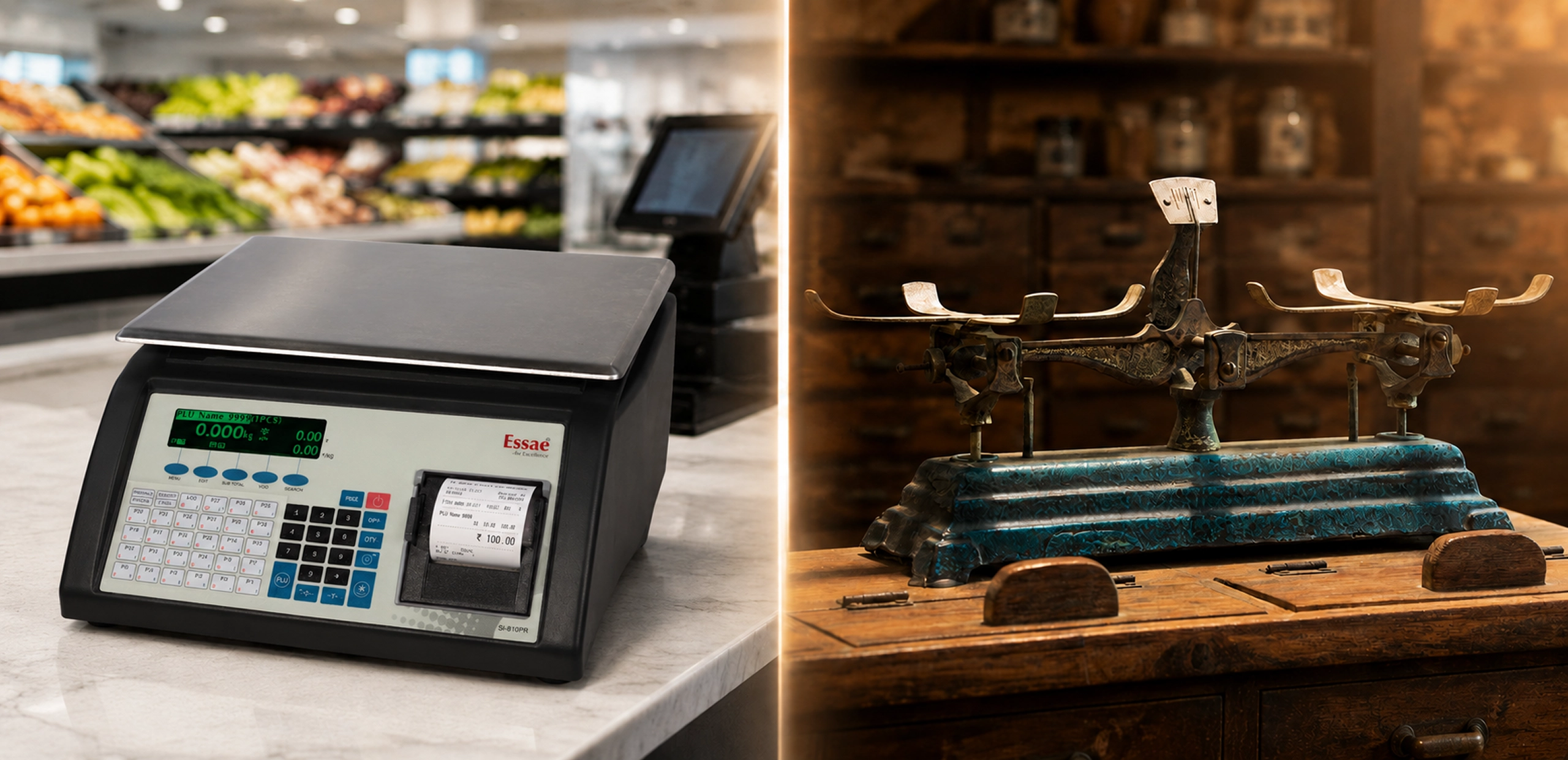
In the retail sector, where accuracy, efficiency, and customer trust play a key role, the importance of weighing scales is often overlooked, as their role involves being more than just a measuring device. With the changing landscape of retail operations, businesses now have the option to go beyond traditional weighing. This is where retail printer scales come in, which support weighing with instant receipt printing.
By understanding the clear difference between retail printer scales and traditional weighing scales, retailers can make an informed decision on choosing the right solution to streamline operations and improve the overall checkout experience.
Why do weighing scales matter in retail?
Weighing scales are a foundational tool in retail as they help ensure accurate pricing and fair transactions for products sold by weight. These include fruits, bulk goods, vegetables, meat, and so on. With accurate weight measurements, the risk of overcharging or undercharging customers is significantly reduced, thereby increasing trust between shoppers and retailers.
Weighing scales also play a key role in legal compliance as many regions require certified weighing machines to adhere to regulatory standards, which helps prevent unnecessary fines and disputes. Weighing scales also help maintain efficient inventory management as it provides precise data for stock control, which helps reduce waste and optimize replenishment. In modern retail, reliable weighing scales simplify operations, improve customer satisfaction, and support transparent fair trade practices.
What are retail printer weighing scales?
Retail printer weighing scales refer to devices that are specially designed to meet the needs of retail environments. Also known as a digital printer scale, they combine weighing with an integrated receipt or label printing function into a single unit. Commonly seen in supermarkets, grocery stores, and local markets, the retail printer weighing scales serve multiple purposes.
It helps measure the weight of the products and instantly print price labels, customer receipts with weight, price, and item details. This helps streamline the checkout processes and reduces manual steps. The combination of weighing and printing capabilities within a single system helps eliminate separate traditional label printers for manual billing. This helps save counter space and increases operational efficiency to a great extent.
At Essae, we offer the Receipt Printing Scale in 3 different models to meet the unique requirements of weighing machines in modern-day retail stores. Integrated with a PC for quick installation and PLU data transfer with the server, it provides access to management reports.
What are traditional weighing scales?
Traditional weighing scales are the regular measuring devices that are used to determine the weight of an item without any integrated printing or billing functionality. These types of weighing scales are usually used in small retail stores, warehouses, manufacturing units, and laboratories. These scales display weight digitally or mechanically, wherein manual price calculation is required along with billing.
The use of traditional weighing scales is suitable for applications that primarily require weight measurement and have low transaction value. These types of weighing scales are generally cost-effective and reliable, but often provide limited support when it comes to modern retail operations. This is because they don’t integrate with a POS (point of sale system) nor generate receipts, which impacts the overall checkout process, making it all the more time-consuming.
Key differences between retail printer scales and traditional weighing scales
The table below shows the key differences between retail printer scales and traditional weighing scales:
| Feature | Retail Printing Scale | Traditional Weighing Scale |
|---|---|---|
| Primary Function | Measures weight and instantly prints receipts or labels. | Measures weight only. |
| Printing Capability | Built-in receipt or label printer. | No printing capability. |
| Accuracy | Reduces human errors through automated billing. | Higher risk of errors due to manual calculations. |
| Retail Suitability | Ideal for high-volume retail environments. | Suitable for basic or low-volume weighing needs. |
| POS Integration | Integrates seamlessly with POS and billing systems. | Operates independently for weighing only. |
| Counter Space Usage | Combines weighing and printing in a single unit, saving space. | Requires separate devices for weighing, billing, and printing. |
| Customer Experience | Provides printed receipts with pricing and weight details. | Offers limited customer-facing information. |
Which type of scale is right for your retail business?
Selecting the right type of weighing scale is entirely based on your everyday business needs. For retail-specific environments such as supermarkets, local markets, and fruit and vegetable outlets, a receipt printer machine or receipt printer scale can work best as it simplifies weighing and billing for a seamless customer experience. Sellers can also avoid manual errors in billing, further increasing buyer trust and satisfaction. They also support quick product look-up (PLU) data and help generate management reports that are essential for optimal business decisions.
In the case of small, low-volume shops, where printing and data integration are not necessarily needed, and simple weighing is sufficient, traditional weighing scales work better. However, they are not suitable to meet the needs of modern-day retail stores.
Conclusion
With the changing trends of the retail industry and fast-paced shopping, the right weighing machine can facilitate a major impact for your business in terms of efficiency and accuracy, which automatically increases customer trust. With a clear understanding of the differences between the receipt printer scale and traditional weighing scale, retailers can invest in the ideal solution for their business to effectively meet operational and customer demands.
At Essae, the receipt printer scale product range is optimized with hardware and software integration for smooth weighing, billing, and printing for improved customer service quality.


