
Checkout speed plays a big role in how customers feel about a retail store. Long queues, repeated billing steps, and manual weighing can slow things down and frustrate both shoppers and staff.
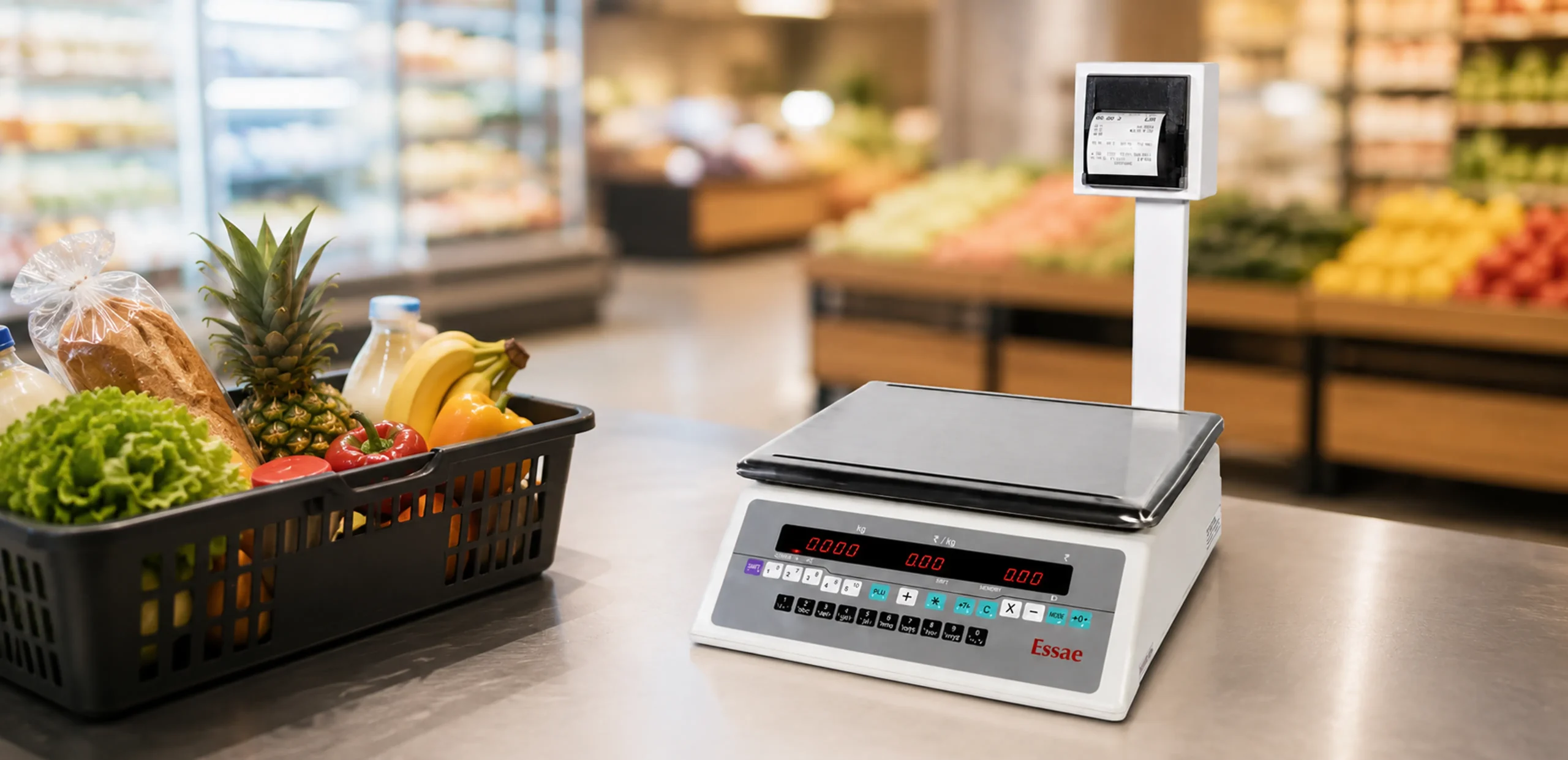
This is where receipt printer scales make a real difference. These devices combine a weighing scale and a receipt printer into a single unit, helping retailers handle transactions faster and with fewer errors.
Instead of switching between separate machines, the cashier can weigh items, calculate the price, and print the receipt in one smooth flow.
From grocery stores to fresh food outlets, receipt printer scales are becoming a practical tool for retailers who want quicker billing and better accuracy without complicated systems.
What Are Receipt Printer Scales?
Receipt printer scales are compact devices designed mainly for retail billing counters. These machines are commonly used in supermarkets, bakeries, meat shops, fruit and vegetable stores, and food retail chains. The scale and printer work together through built-in electronics, reducing the need for manual data entry.
They perform three main tasks:
- Weigh products accurately
- Calculate price based on weight and preset rates
- Print item details and billing information instantly
Faster Weighing and Billing at the Counter
One of the biggest advantages of receipt printer scales is speed. Traditional checkout setups often require staff to weigh items on a scale, note the weight, enter it into a billing system, and then print a receipt separately. Each step adds time.
With a receipt printer scale, the moment an item is placed on the weighing platform, the system reads the weight, calculates the price, and prints the receipt. This reduces checkout time per customer, especially during busy hours. Faster transactions mean shorter queues and smoother counter operations.
Accurate Weight and Price Calculation
Accuracy is very important in retail, especially when selling goods by weight. Receipt printer scales use load cells and digital sensors that measure weight precisely. These readings are processed by the internal controller, which calculates the price based on stored rate settings.
Because the process is automated, the chance of human error is much lower. Cashiers do not need to manually calculate prices or type weights into another system. This helps prevent billing disputes and builds customer trust.
Easy Integration with POS Systems
Most modern receipt printer scales are designed to connect with POS systems through serial, USB, or network interfaces. This allows product data, pricing, and transaction details to flow directly into the billing software.
From a hardware point of view, this integration removes duplicate devices at the counter. The scale becomes part of the billing process instead of a separate tool. This saves counter space and makes the checkout area cleaner and more organized.
Clear and Informative Receipts
The built-in printer produces receipts that include item name, weight, price per unit, total amount, date, and store details. Thermal printing technology is commonly used, which is fast and requires no ink.
Clear receipts reduce confusion for customers and make returns or exchanges easier. For store owners, printed data also supports better record-keeping and stock tracking.
Durable Design for Retail Environments
Receipt printer scales are built to handle daily retail use. The weighing platform is usually made from stainless steel, which resists wear and is easy to clean. This is especially useful in food retail environments.
Internally, the electronics are designed to handle continuous operation. Good thermal printers can print thousands of receipts without frequent maintenance. This reliability helps retailers avoid downtime during peak business hours.
Reduced Training Time for Staff
Because these machines combine multiple functions into one unit, staff training becomes simpler. Cashiers only need to learn one system instead of handling separate scales and printers.
Most receipt printer scales have simple keypads and clear displays. Product codes and prices can be stored in memory, allowing quick selection during billing. This helps new staff get comfortable at the counter faster.
Better Workflow During Peak Hours
During busy hours, every second counts. Receipt printer scales help maintain a steady workflow by cutting unnecessary steps. Cashiers can focus on handling customers rather than managing equipment.
The smoother flow reduces stress at the counter and improves overall store efficiency. When billing moves faster, customers are more likely to leave with a positive impression of the store.
Conclusion
Receipt printer scales play a quiet but important role in improving retail checkout efficiency. By combining weighing, price calculation, and receipt printing into a single device, they simplify counter operations and reduce errors.
Its technical design supports fast processing, accurate billing, and reliable daily use. For retailers dealing with weight-based products, these machines help manage busy counters without adding complexity.
When chosen correctly and used well, receipt printer scales contribute to faster service, better accuracy, and a smoother shopping experience for customers.
Looking to improve checkout speed and accuracy? Essae offers reliable receipt printer scales built for retail environments, combining precise weighing and fast printing to support efficient counter operations.


