
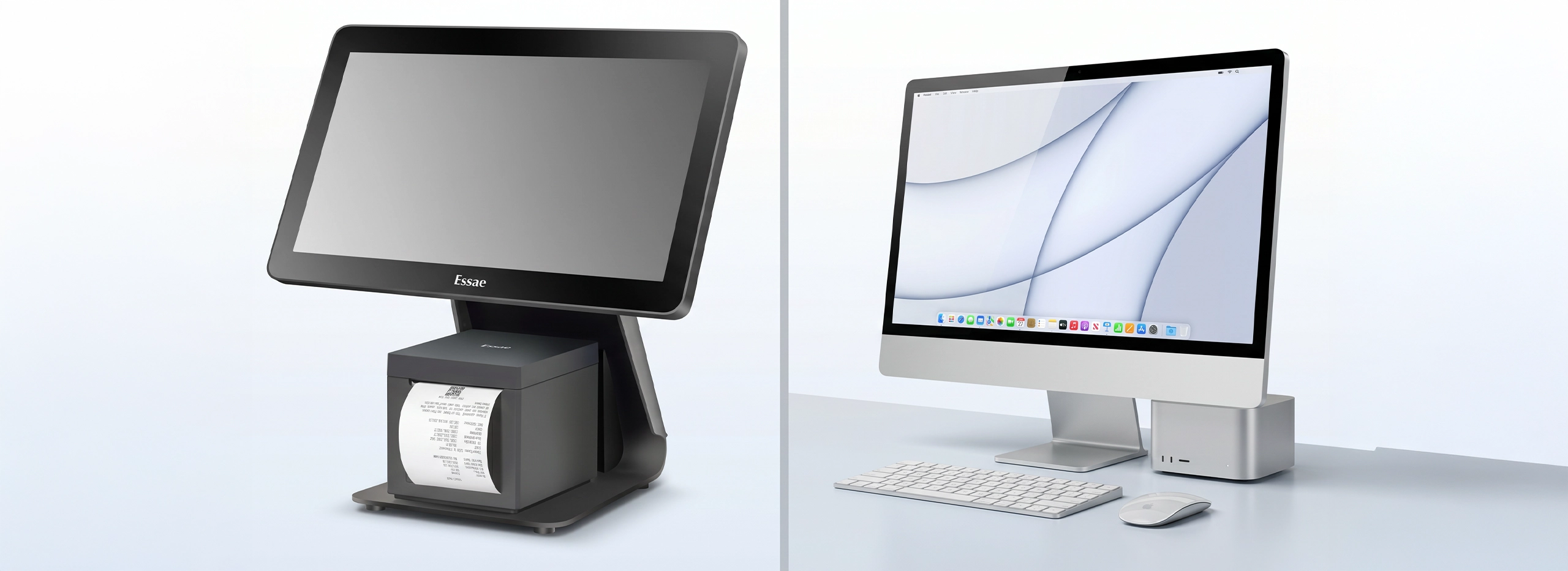
Modern businesses depend on technology to manage sales, inventory, and daily operations efficiently. Choosing the right hardware for traditional computers or specialized POS systems directly affects performance, reliability, and long term costs. POS systems are designed for business environments, offering durable, compact, and fanless hardware, minimal cabling, multiple serial ports, and low power consumption.
They deliver consistent, error free transactions, long lifecycles, and lower total cost of ownership. In contrast, traditional computers are bulkier, have more moving parts, shorter lifespans, higher energy consumption, and require frequent maintenance.
This blog explores these differences to help businesses understand why investing in a business grade POS system, like Essae POS, can provide efficiency, reliability, and long term cost savings.
Understanding POS Systems
A POS (Point of sale) system combines hardware and software into an integrated solution tailored for retail and business operations. Unlike standard computers, POS systems combine a touchscreen interface, embedded CPU, and compact, all in one design to handle high volume transactions efficiently. The hardware is long lasting and built for durability, delivering reliable performance even in demanding conditions.
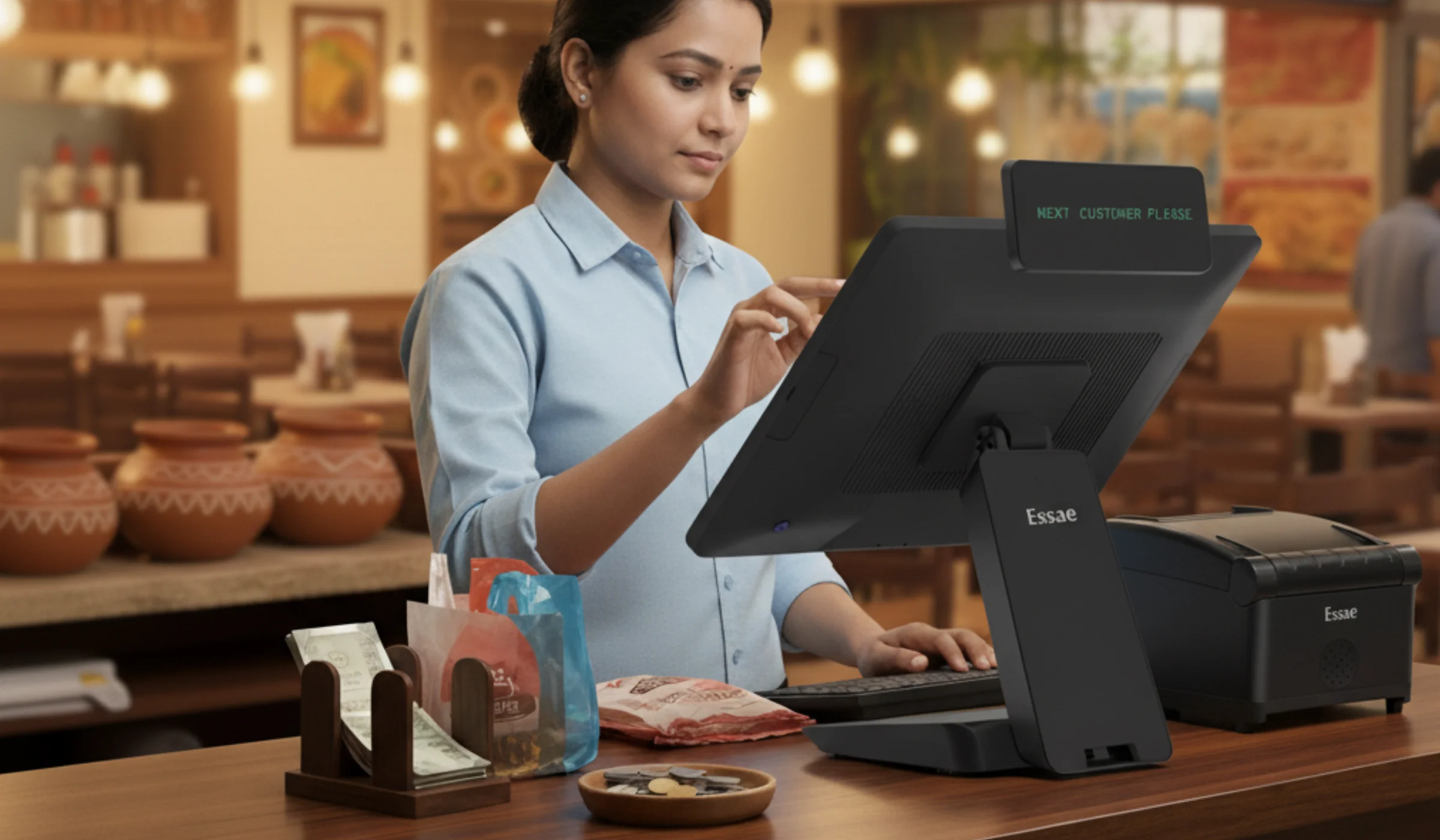
Fanless operation and minimal cabling reduce maintenance needs and prevent downtime, making these systems ideal for continuous use. Business grade features include multiple serial ports for connecting peripherals such as barcode scanners, receipt printers, and cash drawers.
Essae POS systems combine energy efficient design, long lasting hardware, and dependable performance to optimize operations. For detailed hardware specifications, businesses can refer to Essae’s product catalogue, helping choose the right model to match transaction volume, operational requirements, and integration needs.
Understanding computers in business
Desktops and laptops are commonly used in business setups for tasks such as billing, reporting, and inventory management. Their hardware typically includes a separate monitor, keyboard, mouse, and high power CPU, with multiple moving parts and internal fans. While powerful, these systems are prone to hardware failures, have shorter lifecycles, and consume more energy compared to business grade POS systems. Cabling is often complex and can clutter workspaces, making them less suitable for fast paced retail or service environments.
Computers are not optimized for continuous high volume transactions and lack built in integration with peripherals like scanners, receipt printers, or cash drawers. For businesses with moderate usage, they may suffice, but they fall short for environments requiring durability, efficiency, and minimal maintenance.
Key comparison: POS Systems vs Computers
Mechanical pointer dials can be slow to settle, especially when the shop is crowded. The pointer may shake due to table movement or surrounding vibration.
Digital weighing systems solve this through LED or LCD displays that show stable numeric values instantly. Backlit screens allow easy reading even in low light conditions, useful for early morning vegetable markets, storage rooms, and small retail counters.
This quick visibility reduces waiting time, allowing staff to process customers faster and maintain a smooth billing experience.
When a POS System is the right choice
POS systems are the preferred choice for businesses handling high transaction volumes, such as retail stores, restaurants, and foodservice operations. They deliver fast, accurate, and error free transactions while providing durable, long lasting hardware designed for continuous use. Compact and fanless designs save maintenance and downtime, increasing operating efficiency.
Why a POS System stands out:
- Multi user support for simultaneous transactions
- Relevant for cash drawers, receipt printers, and barcode scanners
- Energy efficient hardware reduces operational costs
- Long lifecycle delivering consistent performance
- Improved customer service and workflow efficiency
These features make POS systems ideal for businesses prioritizing reliability, long term cost savings, and smooth day to day operations.
When computers are suitable
Desktops or laptops may be suitable for small offices or businesses with low transaction volumes, where operational demands are limited. They handle basic billing, reporting, and inventory tasks and require minimal hardware integration.
Ideal for:
- Low volume or short term setups
- Flexible for general purpose office tasks
- Total cost of ownership is less critical
- Minimal peripheral integration needed
While they work for simple operations, computers are not ideal for high volume, multi user, or transaction heavy business environments.
Conclusion
Choosing the right hardware is crucial for durability, reliability, operational efficiency, and long term cost management. Business grade POS systems, such as Essae POS, offer compact, fanless, and robust designs that handle high volume transactions with minimal downtime. They provide seamless integration with peripherals, multi user support, and energy efficient operation, delivering consistent performance over several years.
While desktops or laptops may be adequate for small offices or low transaction environments, businesses with demanding operational needs and high transaction volumes benefit significantly from investing in POS systems. Evaluating transaction volume, hardware reliability, and operational requirements is essential before making a choice.
Mechanical scales require manual adjustment using screws or calibration weights. Over time, this becomes time consuming and often requires a technician.


