
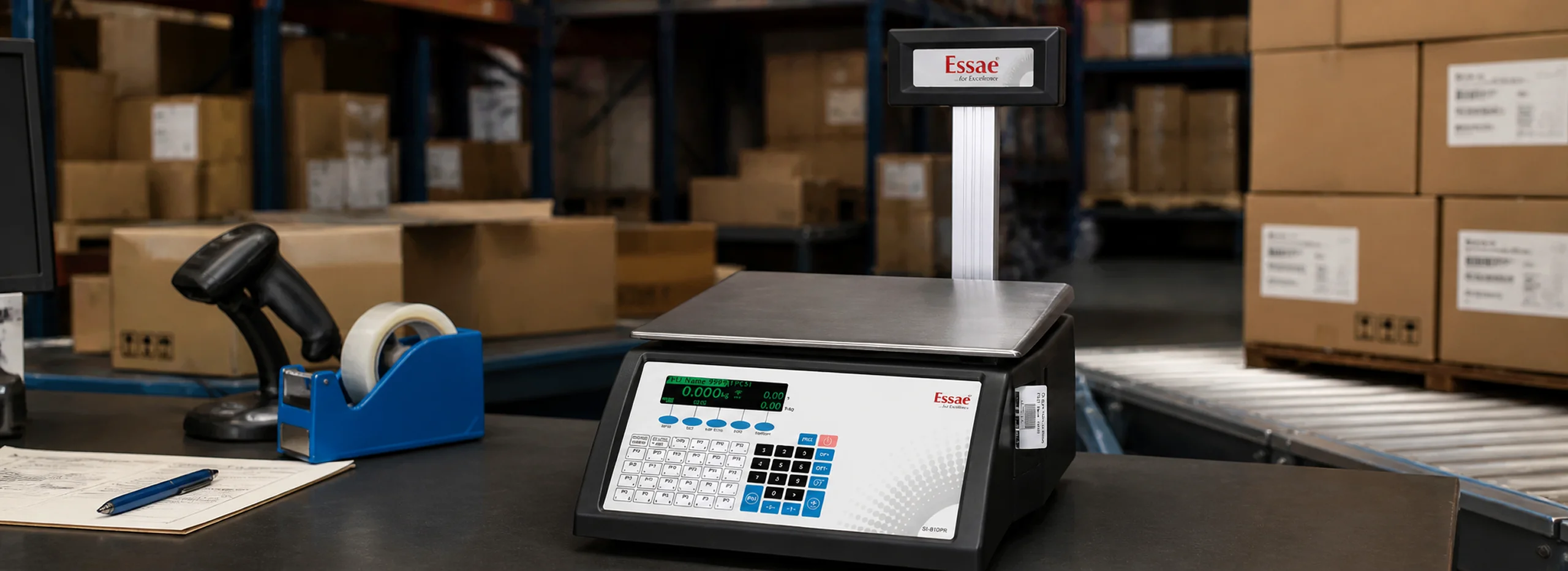
With retail operations becoming faster and more demanding, speed, accuracy, and smooth movement of goods are essential for daily operations. Whether it is a supermarket, grocery store, hardware shop, or bakery, every retail space depends heavily on its weighing system.
Traditional mechanical scales often fall short when it comes to quick reading, stable output, or handling high footfall throughout the day. This is where electronic weighing systems play a major role. Built with strong load cells, clear digital displays, and durable platforms, they support faster billing and steady stock control.
For retailers who depend on strong hardware and precise readings, Essae provides digital weighing systems built with durable components that keep billing accurate and inventory levels steady.
Why electronic weighing systems matter in retail?
Electronic weighing systems are more than just tools for measuring weight they contribute directly to the accuracy of billing, stock records, and customer trust. Modern retail depends on fast moving items, frequent refilling, and clear pricing. A small weighing error can create billing mistakes or stock mismatches. With digital hardware, these problems reduce significantly because the readings remain stable even after thousands of uses.
Below are the major ways electronic weighing systems support retail billing and inventory control.
1. Accurate readings through advanced load cells
Mechanical scales rely on springs or levers that shift over time. This creates errors in readings and affects the price printed on bills. Electronic weighing systems use advanced load cells, solid metal components fitted with strain gauges. When weight is placed on them, the cell produces an electrical signal that converts into an accurate reading.
Because there are fewer moving parts, the readings remain consistent even with heavy, everyday usage. This accuracy helps retail shops maintain clear pricing, avoid customer disputes, and record the correct amount of goods sold.
2. Faster billing with clear digital displays
Mechanical pointer dials can be slow to settle, especially when the shop is crowded. The pointer may shake due to table movement or surrounding vibration.
Digital weighing systems solve this through LED or LCD displays that show stable numeric values instantly. Backlit screens allow easy reading even in low light conditions, useful for early morning vegetable markets, storage rooms, and small retail counters.
This quick visibility reduces waiting time, allowing staff to process customers faster and maintain a smooth billing experience.
3. Durable platforms for heavy retail use
Retail shops deal with constant movement, lifting, placing, sliding, and loading items on the scale throughout the day. Mechanical scales with delicate springs and open internal parts can wear out quickly.
Electronic systems use:
- Strong metal platforms
- Shock absorbing frames
- Reinforced joints
- Sealed internal circuits
These hardware features allow the scale to handle continuous usage without losing accuracy. Many models also support high load bearing capacity, making them suitable for supermarkets, fruit and vegetable shops, butcher shops, and general stores.
4. Multiple modes for retail convenience
Electronic weighing systems do much more than show weight. With built in microcontrollers, they support additional modes that help retail shops simplify operations.
Common retail friendly functions include:
- The tare function subtracts the weight of containers or packaging.
- Piece counting mode for items like screws, nuts, chocolates, or small packets.
- Unit conversion between grams, kilograms, litres, or pieces.
- Weight accumulation to total multiple items across a single billing cycle.
These features help shop owners save time, reduce manual calculations, and improve accuracy during billing and packing.
5. Stable performance under different conditions
Retail spaces experience constant temperature changes, especially bakeries, cold storage counters, and produce shops. Mechanical scales react to humidity and temperature because their springs expand or contract.
Electronic weighing systems are built with:
- Temperature compensated load cells.
- Sealed circuit boards.
- Moisture resistant covers.
This helps them maintain stable performance regardless of environmental conditions. As a result, shops get precise readings throughout the day, even when dealing with fresh produce, frozen items, or warm bakery goods.
6. Simple calibration and low maintenance
Mechanical scales require manual adjustment using screws or calibration weights. Over time, this becomes time consuming and often requires a technician.
Digital scales offer:
- One touch calibration.
- Automatic calibration options in selected models.
- Minimal internal wear due to fewer moving parts.
Routine maintenance usually includes cleaning the platform and checking the power source. This saves shops time and reduces long term service costs.
7. Better stock tracking through data handling
Inventory control becomes easier when weighing data is stored or transferred. Mechanical scales cannot store readings or connect to any device.
Electronic weighing systems come with:
- USB or RS-232 ports.
- Printer connectivity for label or bill printing.
- Options to link with POS systems.
- Memory storage for saving bulk readings.
This helps retailers maintain accurate stock records, reduce manual writing errors, and track daily, weekly, or monthly sales patterns more easily.
8. Compact designs that fit any retail space
Retail counters often have limited space. Mechanical scales are bulky with large dials.
Electronic weighing systems are compact, lightweight, and easy to move. They fit comfortably on billing counters, display tables, or packing stations. Many models run on rechargeable batteries, making them useful for mobile shops, delivery vehicles, and outdoor stalls.
Conclusion
Electronic weighing systems have become essential tools for today’s retail businesses. Their accurate readings. Strong hardware, fast display output, and multiple working modes support both billing and inventory control.
With stable performance across various environments and low maintenance needs, they help retailers handle daily operations with confidence. As retail continues to grow in speed and volume, the shift toward digital weighing hardware becomes even more important.
Essae offers tough, accurate weighing solutions that help retailers maintain clear billing and consistent stock levels. Check our latest models today and strengthen your shop with dependable, long-lasting hardware.


